Topic: Permits
Published: 21 Aug 2026
Four Houston addresses, four different permit processes
Houston has no zoning, but your lot still answers to someone. Which authority that is changes your drawings, your review, and your schedule more than any other early decision.
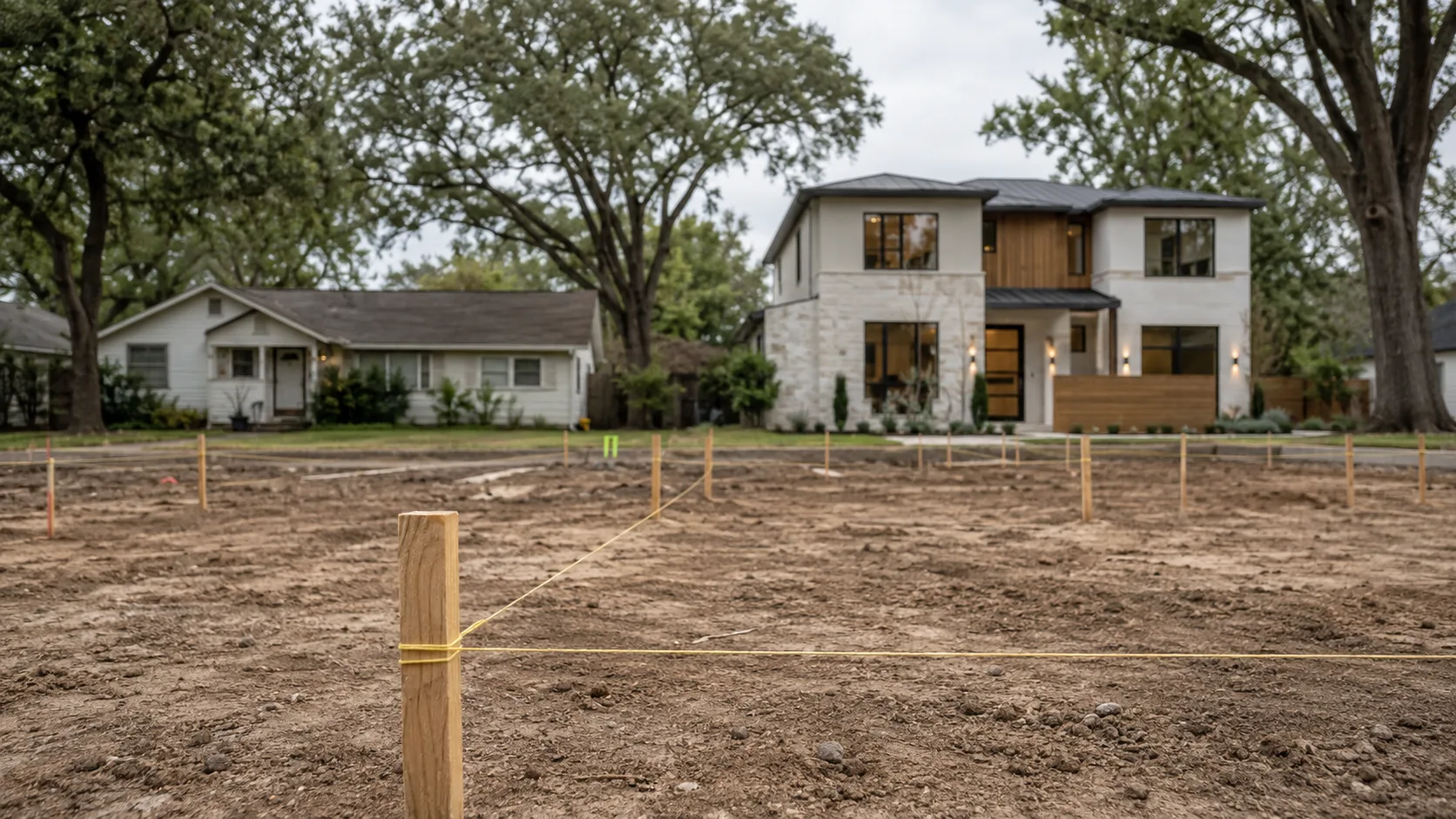
Two houses, four miles apart, same architect, nearly the same design. One took eleven weeks to get through permitting. The other took five months. Nothing about the buildings explained the gap. The addresses did.
This is the part of building in Houston that national advice gets wrong, because national advice starts from zoning and Houston does not have any.
What "no zoning" actually means
It means the City of Houston does not sort land into residential, commercial, and industrial districts the way almost every other large American city does. It does not mean the city is indifferent to what you build.
What constrains a project here instead:
- Deed restrictions, which are private, enforced by neighbours or an association, and vary lot to lot on the same block
- Platting and subdivision rules, which govern whether you can split a lot at all
- Setbacks and parking minimums, which behave a lot like the zoning everyone says does not exist
- Historic district review, in the districts that have it
- Floodplain and detention requirements, which after 2017 apply to far more property than they used to
So the honest version is that Houston regulates land through a different set of instruments, several of them private. That is harder to research than a zoning map, not easier.
And then there are the other cities
Here is the part that catches people. Greater Houston contains a couple of dozen incorporated cities, some of them entirely surrounded by Houston. A Memorial-area address might be in the City of Houston, or in Piney Point Village, Bunker Hill Village, Hunters Creek Village, Hedwig Village, or Spring Valley Village — each with its own permit office, its own adopted amendments, and its own tolerance for a set of drawings that is nearly complete.
Bellaire and West University Place are the two most people encounter. Both are independent cities. Both review more closely than the City of Houston does. Neither is interested in how it works four miles away.
Then there is unincorporated Harris County, which is where much of Cypress, Spring, Klein and Atascocita sit, and which runs a different process again. Cross into Fort Bend, Montgomery, or Brazoria county and the whole thing changes once more.
Why this decides your schedule
The drawings a jurisdiction expects are not universal. Some want an elevation certificate up front. Some want the drainage plan with the initial submittal rather than as a follow-up. Some will review a partial set and comment; others reject it and restart the clock.
That last one is where the months go. Most of the delay owners blame on "the city being slow" is really a second and third trip through intake, because the first submittal was missing something that jurisdiction happened to require.
An architect who files in your jurisdiction routinely knows what that something is. One who does not will find out on your project, on your schedule.
What to do before you hire anyone
Establish the jurisdiction first. Not the mailing address — the mailing address lies, because postal boundaries and city limits do not match. A house with a Houston mailing address can sit in Hedwig Village.
Then ask any architect you are considering a direct question: how many projects have you permitted in this jurisdiction in the last two years? Not "are you familiar with it." A number.
Zero is not disqualifying if everything else fits. But it is a fact worth knowing before you sign, because you are the one paying for the learning curve.
The caveat
None of this means the strictest jurisdiction is the worst place to build. Bellaire and West U review closely partly because their residents want them to, and that same scrutiny is why the housing stock holds its value. Plenty of people would rather wait an extra two months than live next to whatever a neighbour might otherwise have put up.
The mistake is not choosing a strict jurisdiction. It is choosing one without knowing you did.