Topic: Hiring
Published: 26 Aug 2026
Texas does not license general contractors. Here is what to check instead
Texas issues no state licence to residential general contractors. Anyone can print business cards tomorrow. Electricians and plumbers are licensed, architects are registered — and that gap is where most homeowner trouble starts.
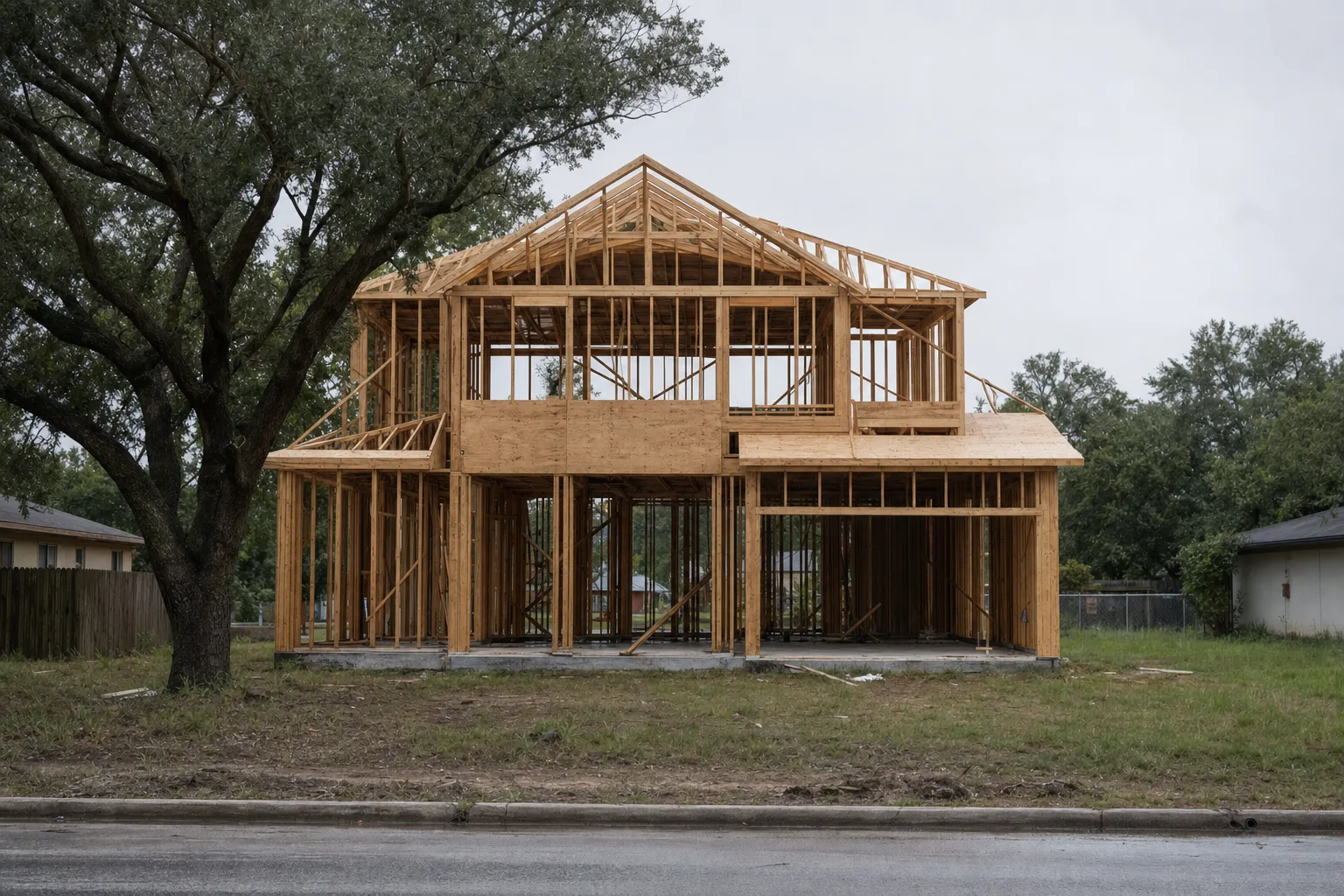
Texas does not license residential general contractors. There is no state exam, no registration number, no board to check. A person who has never built a house can order business cards this afternoon and call himself a builder tomorrow, entirely legally.
That surprises almost everyone who hears it, and it should change how you hire.
The trades are different. Electricians and plumbers are licensed by the state, and their licences can be checked and can be lost. Architects are registered — in Texas that is the Texas Board of Architectural Examiners, whose functions are administered under the Texas Department of Licensing and Regulation. So on a typical Houston job, the person wiring your house is licensed, the person running the water lines is licensed, the person who drew it is registered, and the person coordinating all of them, holding your deposit and controlling your schedule is not.
What "licensed and insured" actually means on a Houston job site
You will see "licensed and insured" on every truck and every website in this city. On the plumbing van it means something specific. On a general contractor's van it usually means the company holds a business registration and carries insurance, which is not nothing but is not a competence test either. Nobody assessed their work.
This is not a scandal, and it is not unique to Texas — several states do the same. It is simply a fact about the ground you are standing on, and the consequence is that verification falls to you. In a licensed state you can outsource some of your judgement to the licensing board. Here you cannot.
Does a permit mean the city checked my contractor?
No. A permit is a check on the work, not on the person. The city or county reviews drawings against code and inspects the construction at set stages. That process catches a joist hanger that is not there. It does not tell you whether the company will still exist in 8 months, whether they are paying their subs, or whether the number they gave you bore any relationship to what the job costs.
Those are the failures that actually hurt homeowners, and no inspector is looking for them.
6 things worth checking, in the order they are worth checking
Insurance certificates, sent directly from the insurer. General liability and workers' compensation. Ask for the certificate to come from the insurance agent rather than from the contractor's own files. A PDF can be edited; an emailed certificate from the agency cannot be, as easily. Texas does not require most private employers to carry workers' compensation, which makes this more important here, not less — if an uninsured worker is injured on your property, the question of who pays does not have a comfortable answer.
Lien history. Search the county clerk's records for mechanic's liens filed against the contractor, and by their suppliers. A pattern of liens from suppliers means they are slow to pay the people who deliver their materials, and eventually that arrives on your project as a stalled delivery.
The licensed trades under them. Ask which electrician and which plumber they use, then check those licences yourself. A general contractor who cannot immediately name their trades is subcontracting to whoever is cheapest that month, and the quality of a house is largely determined by exactly that.
References from projects that finished more than 1 year ago. Anyone can produce a delighted client at handover. What you want to know is what the house was like after a summer of expansion and contraction on gumbo clay, and whether calls were returned when something needed fixing.
A written scope, not a number. A bid that is one page and one figure is not a bid; it is a hope. The scope is where the disagreements you have not had yet are hiding.
Whether they have built in your jurisdiction. This one is specific to this metro and it matters more than people expect.
Why the jurisdiction question is doing more work than it looks
Houston has no conventional zoning. What it has instead is a patchwork: deed restrictions enforced privately, platting and setback rules, historic districts, and around 24 separate incorporated cities with their own permit offices and their own requirements.
A contractor who has built 20 houses in Cypress has been filing with unincorporated Harris County. That is a genuinely different process from the City of Houston, which is different again from Bellaire, West University Place, or the Memorial Villages, each of which runs its own office. Fort Bend, Montgomery and Brazoria counties are separate once more.
None of this makes an out-of-area builder incompetent. It does mean their schedule is a guess, and their guess will be optimistic, because they are pricing a process they have not been through. When the first submittal comes back with comments they did not anticipate, the delay is real and it is yours.
How do I check a contractor if there is no licence to look up?
You assemble the picture from the pieces that do exist. County clerk records for liens and lawsuits. The Secretary of State for whether the entity is in good standing and how long it has existed. Insurance certificates from the agent. The state licences of the electrician and plumber working under them. Permit history in the jurisdiction where you are building — which also tells you whether they pull permits at all, and a contractor who suggests skipping one is telling you something important about how they work.
None of these is a licence. Together they are better than one, because a licence tells you somebody passed a test years ago and these tell you how the company behaves now.
The design side is checkable, and that is part of the answer
Architects are registered, and registration can be verified. That asymmetry is one practical reason to bring a designer in early rather than hand the whole project to a single unverifiable party.
An architect who stays involved through construction is also reading the invoices against the drawings, which is a different relationship from the one you have with a contractor you are paying directly and assessing alone. Modern Acre Studio has written about what that supervision role involves in practice, and it is worth reading before you decide the design fee is the part of the budget to trim.
This is where a bargain hunt tends to go wrong. The cheapest bid frequently belongs to whoever understood the job least, and the gap arrives later as change orders, when you have no leverage because the walls are open and the crew is already there.
Should I pay a deposit up front?
Some deposit is normal — materials get ordered, and nobody floats that for you. A large one is not. Payment should track verified progress, and "verified" should mean somebody who is not the contractor has looked at the work. Front-loaded payment schedules are the mechanism behind most abandoned-project stories, because once the money is ahead of the work, your leverage is gone and their incentive to come back is gone with it.
Hold a retainage until the punch list is genuinely closed, and write that into the contract before anything is signed.
The honest caveat
Plenty of Houston's best builders have no licence because there is none to have, and some have been building beautifully for 30 years. This piece is not an argument that unlicensed means unqualified — it plainly does not. Some of the most careful work in this city is done by people whose only credential is the houses standing behind them.
The argument is narrower: the state is not doing the screening, so you are. Most homeowners assume otherwise, spend 20 minutes on the decision, and find out during construction.
What is the single most useful check?
Insurance certificates direct from the agent, and a written scope. They take an afternoon between them and they eliminate the two failure modes that cost the most: an injury nobody has coverage for, and a disagreement about what was included that neither side can resolve because nobody wrote it down.
Where to start
Get your drawings and your scope defined before you take bids, so the bids are comparable and the contractor is pricing a defined thing rather than an idea. Then check the six items above on every firm you are seriously considering.
If you are still working out who to talk to, the register on this site lists residential practices across the Houston area with the jurisdiction each one files in, so you can start from firms that have actually worked where you are building. The cost calculator gives honest ranges for what a budget buys here, with design and permitting shown separately from construction, because they are separate and conflating them is how schedules slip.
Neither replaces due diligence. In a state that does not license the person running your project, nothing does.