Topic: Construction
Published: 9 Oct 2026
What the city inspector checks on a Houston new home, and what nobody checks
A city or county inspector checks that the work in front of them meets minimum code at set stages. They do not check your contract, your finishes, your schedule or your contractor, and in some unincorporated areas nobody inspects at all. The gap between a passed inspection and a house that is right is yours to cover.
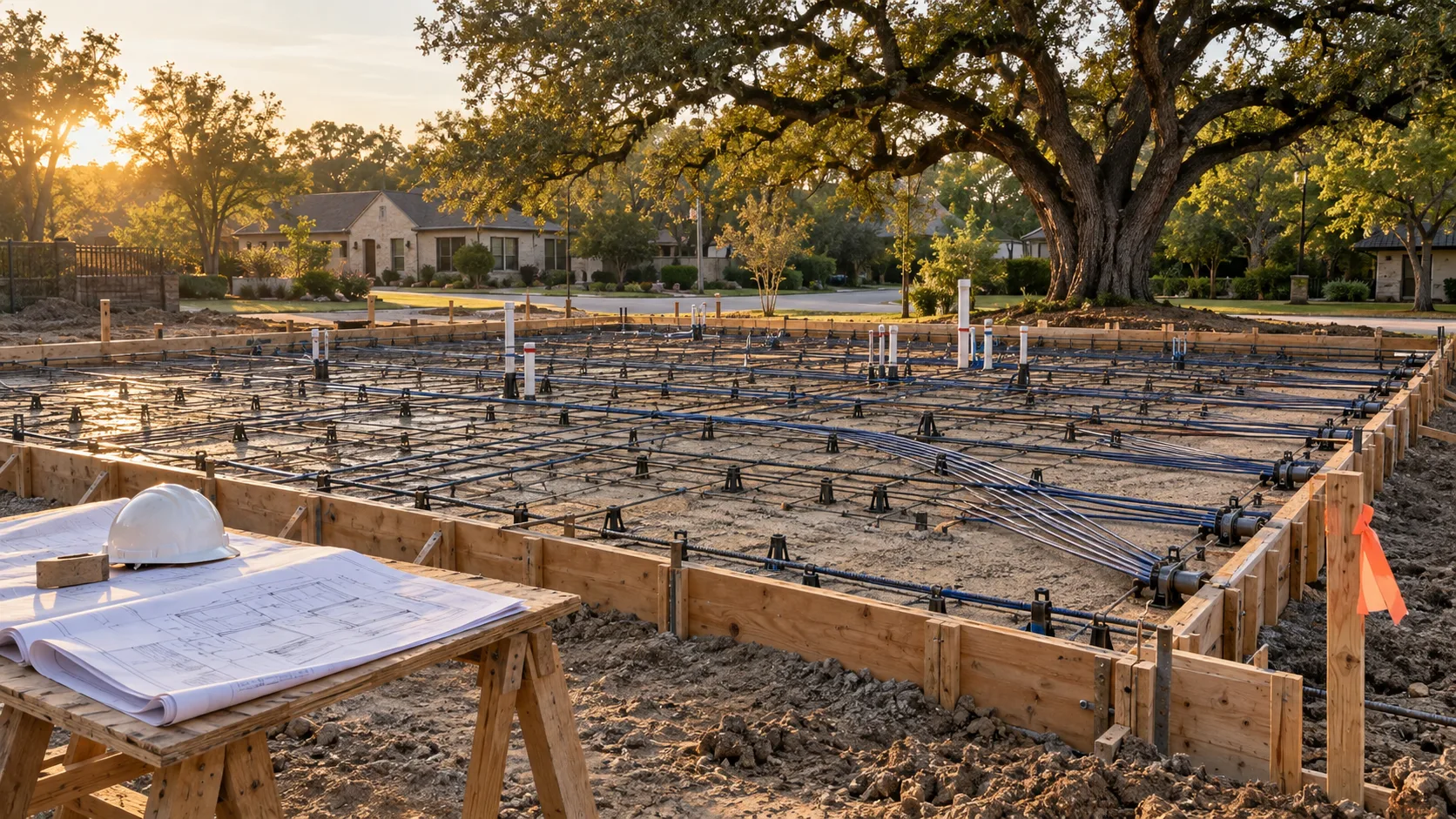
A passed inspection means the work an inspector looked at met minimum code on the day they looked. That is all it means. It does not mean the house matches your drawings, your contract or your budget, and it does not mean anyone checked the contractor.
Most owners hear "the city inspects everything" and relax. In Houston that sentence is wrong in 3 different ways, and each one has cost somebody real money.
What does a building inspector actually look at?
Code. Specifically, the parts of code that can be seen and measured at a given stage of construction, against the permitted drawings on the job site.
Inspections are staged. The inspector comes when a piece of work is about to be covered up: the foundation before concrete goes in, the framing before the insulation, the pipes and wires before the drywall. The logic is simple. Once a thing is buried, nobody can see it again without demolition, so someone with authority looks first.
At each stop the inspector holds a narrow question. Is the structure built the way the stamped drawings say? Are the connectors and fasteners where the engineer put them? Is the electrical and plumbing rough-in installed to the adopted code? A pass is a yes to that question for that visit.
Three Houston details come straight from the City's own permit pages, and they trip up first-timers:
- The permit and the approved plans must be on site when the inspector arrives. No plans on the job, no inspection.
- A legal form survey has to be handed to the inspector at the first structural inspection. That applies to slab-on-grade and pier-and-beam foundations, and to additions that extend the existing footprint.
- Inspections are requested through the City's phone system, and trade inspections have to be scheduled by the registered, licensed contractor. Requests are filled the next business day. There is no same-day option.
I am deliberately not giving you a stage-by-stage Houston checklist. The City's published pages describe the mechanics, not a full sequence, and the order shifts with the project type and the jurisdiction. Ask your architect for the sequence that applies to your permit.
Does passing inspection mean my house is built to the drawings?
No. The drawings can be right and the house can still differ from them in ways the code does not care about.
A code inspector will not notice that the kitchen window sits 6 inches off the dimension on the elevation. They will not notice that the wrong stone showed up, that the ceiling is 9 feet where you paid for 10, or that the plaster is not the one you approved. None of that is a code matter. All of it is a contract matter.
This is the gap the inspection system leaves open on purpose. The city is protecting the public from unsafe buildings. It is not protecting you from a builder who delivers a safe house that is not your house.
Somebody has to compare the work to the drawings on a schedule, and it will not be the city. On a custom home that is usually the architect during construction, an owner's representative, or you. If nobody has the job, the first person to compare the finished house with the plans is you, on move-in day, with the final payment already made.
That is the real argument for having the person who drew the house walk the site. It is also why the arrangement should be written down: who visits, how often, and what they sign off on before a payment is released. An architect who stays on through construction, acting as your construction supervisor, is closing exactly this gap, and it is worth pricing as its own line rather than assuming it is included.
What happens if my builder is not qualified?
Nothing happens at the inspection. That is the 2nd way the sentence is wrong.
An inspector checks work, not people. Texas has no state licence for general contractors, which I covered separately, and the city does not vet whoever signs the permit. The trade inspections do carry a licensing requirement for the contractor who schedules them, and that is a real check. But the general contractor, the person who holds your money, your schedule and your subcontractors, is not examined by anyone for competence, solvency or honesty.
The failures that hurt owners most are not code failures. A builder who runs out of cash halfway through can pass every inspection until the day they stop showing up. A builder who pays the framer and not the lumber yard leaves you with liens. A builder who quietly swaps a finish passes everything. None of these shows up on an inspection card.
Are there places in Greater Houston where nobody inspects?
Yes, and this is the 3rd way. Enforcement of building codes is local. It depends entirely on which government has authority over your address.
The City of Houston, Bellaire and West University Place each run their own review and inspection. Inside those lines you get staged visits like the ones above. Unincorporated Harris County, where much of Cypress, Spring, Klein and Atascocita sits, works differently, and the piece on building in unincorporated Harris County and MUD districts sets out how. Cross into another county and the answer changes again.
Texas used to have a state residential construction commission with an inspection program. It was abolished, and in 2009 counties were given the option of running a voluntary version, with the builder paying for the inspections. Voluntary means some do and some do not. If you are building outside a city, do not assume an inspector will ever visit. Ask the county, in writing, what inspections your permit triggers and who performs them.
When the answer is "none," you hire your own. A private inspector working for you, not for the builder, can be engaged at the foundation, the framing and the pre-drywall stage. Get quotes per visit before you commit. The only inspector worth paying is one who puts findings in writing and has nothing to gain from the builder.
Which jurisdiction governs your lot settles all of this before you buy the land, so it belongs in your first week, not your first foundation.
What about the foundation, the one thing that really matters here?
On Houston clay the foundation is where inspection and engineering overlap, and it is also where owners are least protected.
The city inspector checks the pre-pour condition against the engineer's drawing: the forms, the steel, the cable layout, the sleeves. That is useful. But the question that decides how your slab performs for decades is whether the soil and the design match, and no municipal inspector evaluates that. How gumbo clay moves a house is the engineer's problem and the geotechnical report's job.
Two things protect you beyond the city's visit. First, ask the engineer in advance, not after the pour, whether they will issue a letter confirming the as-built foundation matches the design. Second, be there on the day. Look at the cable ends, the cover over the steel and the condition of the pad. You are not qualified to approve any of it, but you can photograph all of it, and photographs taken before the concrete arrives are the only evidence you will ever have of what is underneath.
One concession in the builder's defence. Foundations are scheduled around weather and crews, and a pre-pour inspection that slips a day with a concrete truck booked is a real cost. A good builder fights to keep the inspection on schedule rather than pour without it. A bad one asks the inspector to come back later and pours anyway. If you hear that sentence, stop the pour.
What should I do when a defect shows up after the final?
Act early and in writing. The Texas Residential Construction Liability Act, Chapter 27 of the Property Code, requires written notice to the contractor, by certified mail, at least 60 days before you file suit or start arbitration. The contractor may then ask to inspect and offer a repair.
The details of that process, including the inspection window, are for a Texas construction attorney to confirm for your situation. I would rather say so than quote a deadline from memory. What matters at the planning stage is that the process runs on documents. Photographs, dated emails, the inspection cards left on site and signed change orders all become the record.
So keep the inspection cards. Photograph each one the day it is signed. That folder is boring, and it will be the most useful thing you own if there is ever a dispute.
What should an owner do at each inspection?
Not much, and you should still do it.
- Ask for the date. Your builder schedules it. You should know when it is, even if you do not attend.
- Ask what failed. Failures are normal. A first visit that fails and gets corrected is the system working. A builder who tells you every inspection passes on the first try is either lucky or not telling you.
- Get the card. Photograph it. Send the photo to your architect and to yourself.
- Pair it with a drawing check. The same day, someone compares the covered work to the drawings. The inspector will not do it for you.
None of this slows the job. It takes about an hour a visit, and it is the cheapest hour of project management in the whole build. A full drawing set is the document that makes the comparison possible, which is one more reason to have a complete one before you break ground.
How much does skipping this cost?
I cannot give you a fair average and I will not invent one. What I can say is where the money goes. A foundation problem found after the house is framed is a structural repair and months of delay. A wall assembly closed up wrong has to be opened and redone. A wrong finish becomes a credit negotiation. Every one of them is cheaper to catch at the stage where it is still visible.
The inspection system works for what it was built to do. It keeps the worst structures and the worst wiring from being occupied. Do not ask it for more than that, and do not let anyone tell you it already has.