Topic: Building Science
Published: 19 Oct 2026
Will new windows lower a Houston cooling bill? Less than the sales pitch says
Replacing the windows in an older Houston house usually trims the cooling load by a modest amount, and the savings come from the glass coating on the west and south walls, not from the frames. Solar screens, shade and attic air sealing often beat full replacement on cost per dollar saved, and replacement earns its price mainly when the old units are rotted, leaking or failing.
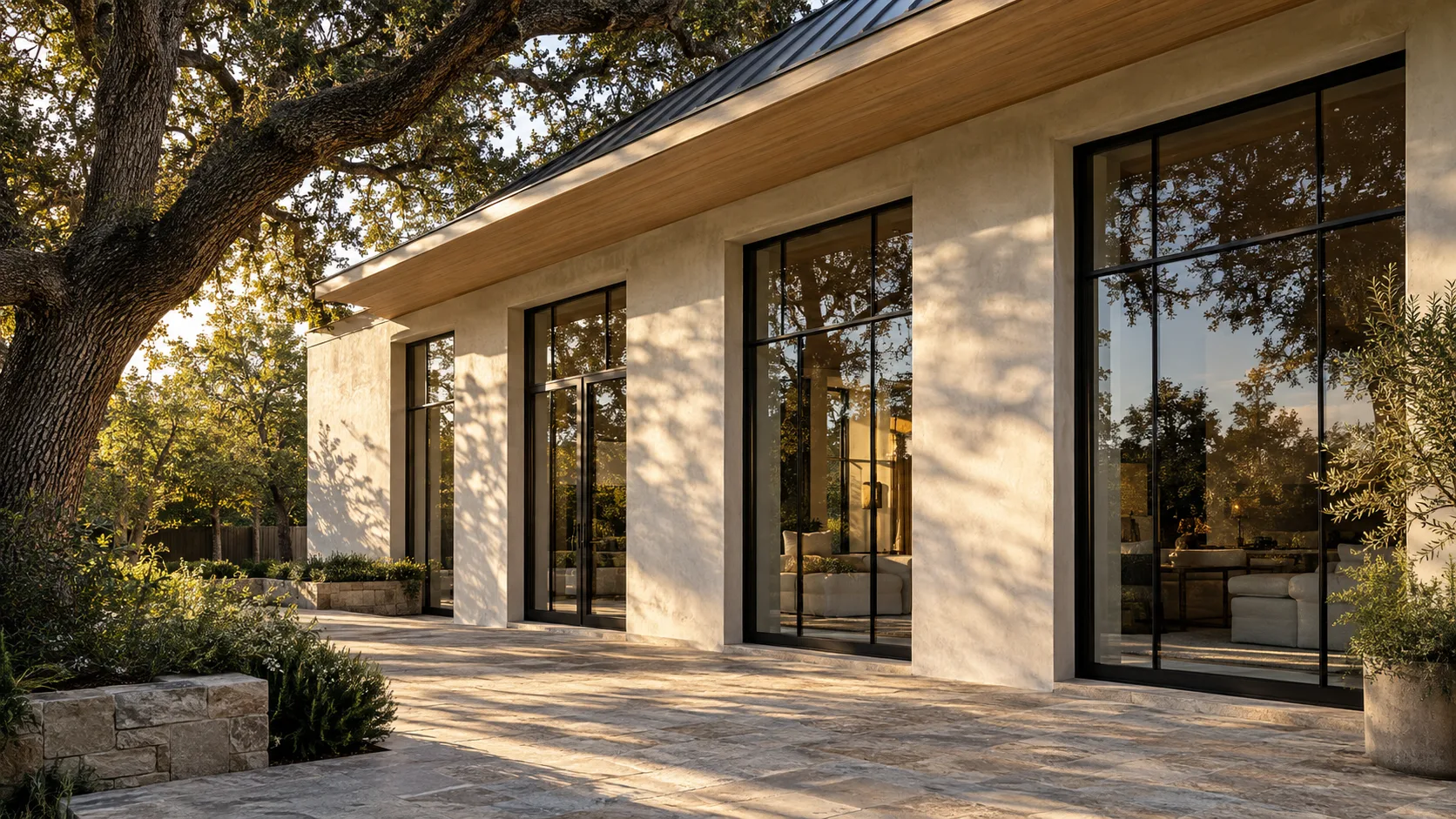
Usually less than you were told. In an older Houston house, new windows trim the cooling load by a modest amount, and almost all of that comes from the coating on the glass, not from the frame or the brand. Window replacement pays back slowly on energy alone. It earns its price when the old units are rotted, leaking or failing, and for hot-wall relief alone it often loses to cheaper moves like solar screens, shade and sealing the attic.
That's the answer. The numbers behind it are worth knowing before you sign a whole-house window proposal.
Why do windows matter so much in Houston?
Because in climate zone 2A the job is keeping heat out, not in. Houston has roughly 6 months of the year when the air conditioner runs most of the day, and a window is the one part of the wall that lets the sun straight into the room.
Walls and glass behave differently. A stud wall with R-13 batts blocks conducted heat reasonably well, and the sun hits its exterior surface, not your living room. Glass is the opposite. Clear single-pane glass, the kind in a 1960s ranch or a 1930s Heights bungalow, passes about 80–85% of the sunlight that hits it. On a west wall at 4:30 in the afternoon in August, that is on the order of 150 BTU per hour for every square foot of glass, before the AC has done anything about it.
Do the arithmetic on one room. A west bedroom with 40 sf of unshaded clear single-pane glass takes about 6,000 BTU/hr from the sun at peak. That's half a ton of cooling, from one room, for the hours when the grid is also at its most strained. Swap in glass with a low-E coating rated at a solar heat gain coefficient of 0.25 and the same 40 sf lets in about 1,900 BTU/hr. The difference, roughly 4,000 BTU/hr, is real, and it is why the west room is the one nobody wants to sleep in.
Those are rough numbers. Actual gain depends on the overhang, the trees, the screens and the sky that day. But the order of magnitude holds, and it's the number that decides which windows are worth replacing.
What's the difference between U-factor and SHGC, and which one matters here?
Two ratings sit on the NFRC label stuck to every new window, and they measure different things.
U-factor is how fast heat conducts through the window when the inside and outside temperatures differ. Lower is better. Clear single pane runs around 1.0 or higher. A decent double-pane low-E unit is near 0.30.
SHGC, the solar heat gain coefficient, is the fraction of the sun's energy that gets through as heat. It runs from 0 to 1. Lower is better here too, for a cooling climate.
In Minnesota, U-factor is the headline because the house is fighting a 70-degree gap for months. In Houston the gap between indoors and outdoors is rarely above 25 degrees, and it's the sun, not the temperature difference, that loads the air conditioner. SHGC is the number to chase. A window with a pretty U-factor and an SHGC of 0.40 is the wrong window for a west wall in Houston.
The prescriptive energy-code table for climate zone 2 in the IECC sets a maximum SHGC of 0.25 and a maximum U-factor of 0.40 for windows. Which edition the city or county has adopted, and whether trade-offs are allowed, changes by jurisdiction, so confirm with the building department before you order. The point is that code, correctly, leans on the solar number for Houston.
What does a low-E coating actually do?
It's a microscopically thin metallic layer on one of the glass surfaces that reflects part of the sun's infrared energy while letting most visible light through. Different coatings are tuned for different jobs. A "high solar gain" coating, sold for cold climates, lets sunshine in. A "low solar gain" coating, the one you want here, bounces most of it back out.
You pay in two small ways. Low-solar-gain glass tints the view slightly, usually a faint gray or blue-green, and cuts a little daylight. And on a north wall, where there's no direct sun to reject, that coating buys you almost nothing. Specifying the same glass on all four elevations is the most common waste in a window package. North glass can be a cheaper unit. West and south get the good stuff.
Do new windows pay for themselves?
On energy alone, usually not within a time frame anyone enjoys. A whole-house window replacement is a five-figure job on most houses, and the price swings with size, frame material and whether the openings need rebuilding, so get current local bids before you budget. Then ask each bidder to estimate the cooling savings in dollars per year, and divide. The savings from better glass on a house that already has a reasonable roof and ducts are a small slice of the cooling bill, so the payback comes out in decades, uncomfortably close to the life of the window itself.
The honest cases where replacement wins are not about the bill:
- The sash is rotted. In a wet climate with St. Augustine sprinklers hitting the siding, wood sills fail first.
- The seals have failed and the glass fogs between the panes. That's a dead unit, not a repair.
- The window won't open, won't lock, or leaks air so visibly that a candle flame leans.
- The house is going to be reroofed, re-sided or re-plastered anyway, so the windows can be installed properly with new flashing rather than shoved into old openings.
- Noise from a street or the Beltway is the actual complaint.
If none of those apply, the bill is not a good enough reason by itself.
What should I try before replacing the windows?
Cheaper things that attack the same sun, in roughly this order of return:
- Exterior solar screens. A fabric screen stretched over the outside of the frame blocks something like 70–90% of the sun depending on the weave, before it ever reaches the glass. They cost a small fraction of a window and go on the existing frame. This is the single best dollar-for-dollar move on a west wall, and the choice of the weave is a real tradeoff, because the denser the screen, the less view you keep.
- Shade you can plant or build. A deep overhang, a pergola, an awning or a live oak on the west side. Shade outside the glass beats any coating inside it, because the heat never reaches the window. It also takes years if it's a tree.
- Interior shades. Better than nothing, a lot worse than exterior shade, because the heat is already inside the glass when the shade catches it.
- Seal the attic and ducts. If the second floor is hot, the culprit is as often a vented attic at 130°F and leaky ducts as the windows. The piece on spray foam in an existing attic covers that fix, and it frequently moves the needle further than the glass does.
- Window film. A professionally applied solar film on existing glass can cut gain at a modest price. Check the film's warranty against your window's, since some glass manufacturers void theirs.
Then, and only then, ask whether the remaining gain justifies replacement.
Will new windows let me downsize the air conditioner?
Sometimes, and only if somebody re-runs the load calculation afterward. Better glass lowers the cooling load, and a house whose windows went from clear single pane to SHGC 0.25 can shed a significant fraction of a ton. But the equipment stays the old size unless someone changes it, and an air conditioner that's now too big for the house will short-cycle and leave the air damp. The Manual J article explains why that matters more in Houston than in most places. If you are replacing both windows and the unit in the same year, size the unit after the windows, never before.
What about hurricane and impact-rated windows?
That's a different decision, driven by wind and debris, not by the cooling bill. Impact-rated glass is required in the windborne-debris regions along the coast, and coastal Galveston County carries stricter requirements than inner Houston. Most of Harris County sits outside those regions, so impact glass inland is a choice, not a rule. It does add a layer of security, noise reduction and ultraviolet filtering, and it costs meaningfully more than standard glass. Pick it for those reasons, not for the energy savings. Many impact-rated units do come with a low-E coating, so you can often get both, but confirm the SHGC on the label instead of assuming it.
Can I replace windows in a Houston historic district?
Not freely. In the City of Houston's historic districts, including Heights East, West and South and Woodland Heights, exterior changes need a Certificate of Appropriateness, and windows on a contributing house are one of the things the commission cares about. The original wood sash is usually part of the house's character, and the Certificate of Appropriateness piece walks through how that review goes. Often the better move there is restoring the existing sash, adding weatherstripping and a storm window, and putting a solar screen on the west side. A restored 1920s double-hung with a storm window outperforms a leaky replacement vinyl unit, and it doesn't need a fight at the permit counter.
What should I ask the window installer?
Five questions, and the answers tell you whether you're buying windows or a sales pitch:
- What are the U-factor and SHGC on the NFRC label for each elevation? A salesperson who cannot read you the numbers is selling a brand.
- Is the glass the same on all four sides? It shouldn't be.
- Are you installing "pocket" inserts into the old frames, or a full-frame replacement with new flashing? Inserts shrink the glass area and leave the old frame's problems in place. Full-frame costs more and fixes the actual weak point, the joint between the window and the wall.
- Who tests or checks the flashing and sealant at the sill? Water in Houston comes sideways in a tropical storm, and the sill is where it gets in.
- What does the warranty cover, and does it transfer if you sell? Many do not.
If you are building new instead of replacing, frame material and glass type are choices you make at the drawing stage, and the way the window sits in a deep, shaded wall changes the load more than any coating. Modern Acre Studio's comparison of window frame materials and glass covers the frame side of that choice.