Topic: Hiring
Published: 28 Sep 2026
Allowances in a Houston construction bid: why the lowest number is often the least finished
An allowance is a placeholder dollar amount a builder carries for something not yet chosen, like lighting, tile or appliances. When one bid is lower than the others, the gap usually sits in allowances set below what you will actually pick, and you pay the difference later as a change order. Compare bids by listing every allowance side by side, pricing your own likely selections against them, and pushing as many items as you can into fixed scope before you sign.
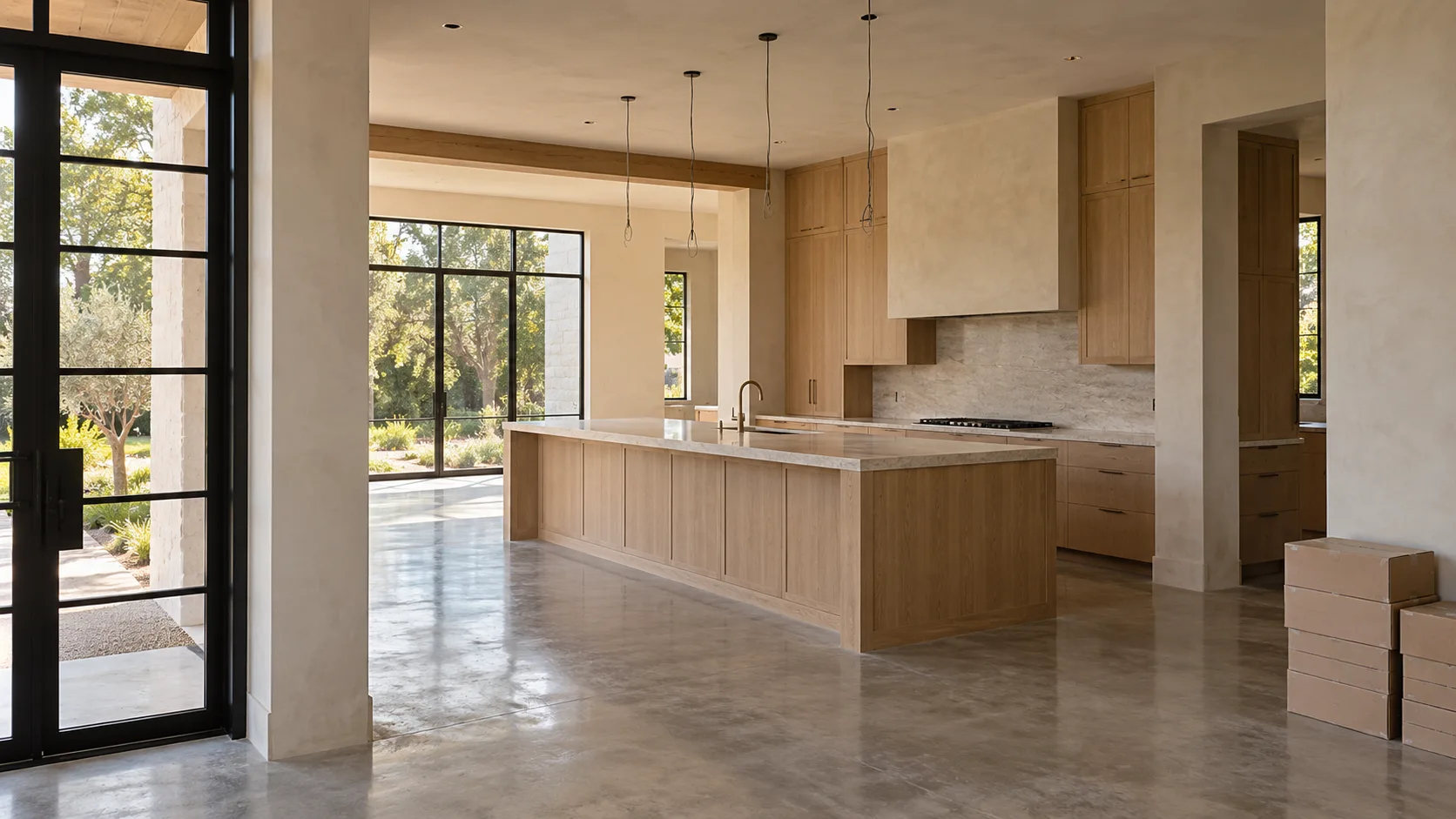
An allowance is a dollar figure a builder carries in a bid for something nobody has chosen yet: the light fixtures, the tile, the plumbing trim, the appliances. When one of 3 Houston bids comes in well under the other 2, the gap is usually sitting in those allowances, set lower than anything you will actually pick. You pay the difference later, as a change order, after the contract is signed and the leverage is gone.
So the bid that looks cheapest is often the least finished one. The fix is dull and it works: put every bid's allowances in one table, price your own likely selections against them, and move as much as possible out of allowances and into fixed scope before anyone signs.
What is an allowance in a construction contract?
It is a budget line with no product attached. The contract says something like "lighting fixtures: $8,000 allowance," and the builder promises to install whatever you select. If your selections cost less, you get a credit. If they cost more, you pay the overage.
That is the theory. In practice 3 things decide whether an allowance is honest.
The first is the number itself. An allowance sized for a builder-grade house, dropped into a bid for a house with a white oak kitchen and plaster walls, is a number designed to be exceeded.
The second is what it covers. "Tile allowance: $12,000" can mean material only, or material and setting labor, or material, labor, waterproofing and the Schluter trim. The same $12,000 buys very different bathrooms depending on which one it means, and bids from different builders rarely define it the same way.
The third is the markup. Most builders add overhead and profit to overages. Some add it to the whole allowance line from the start. A contract that says overages are billed "at cost plus the contractor's fee" means every dollar you go over costs you more than a dollar.
Why do allowances matter more in Texas than in some other states?
Because nobody standardizes the contract. Texas does not license residential general contractors at the state level; plumbers and electricians hold state licenses, but the builder running your job does not need one. We covered what that means for vetting in what to check when Texas does not license general contractors. For allowances, the consequence is simple: there is no state form, no required disclosure, and no common definition of what a "flooring allowance" includes. Every builder writes their own.
That puts the burden on the drawings and the specifications. If the drawing set names the product, the builder has to price the product. If it says "tile by owner," every builder guesses, and the guesses will not match.
Which allowances run over most often on a Houston custom home?
Finish allowances get the attention: lighting, tile, plumbing fixtures, cabinet hardware, appliances. They do run over, reliably, because owners tend to fall in love with things in showrooms. But they run over in amounts you can see coming, and you control them by choosing differently.
The allowances that hurt in Houston are the ones below the finish line.
Foundation and piers. Houston sits on gumbo, an expansive clay that swells when wet and shrinks when dry. A post-tension slab is the regional default for new houses, and its design depends on the geotechnical report for your lot. A bid written before the soil report exists may carry a foundation "allowance" or a generic slab price. When the report comes back recommending deeper beams or piers, that line moves, and it moves by more than a tile upgrade ever will. Our piece on gumbo clay and what it changes about a project explains why the report is not optional.
Site work and drainage. Detention and drainage requirements drive site design on a lot of Houston new construction, especially on larger lots and lot splits. Fill, grading, driveway, flatwork, a storm line to the street: a bid that says "site work allowance" before a civil or drainage plan exists is a guess. Inner-loop teardowns add demolition, tree protection and sometimes an old slab or pier field left under the dirt.
Hidden conditions on remodels. Pre-1950s houses in the Heights, Woodland Heights, Norhill and parts of Montrose are often pier-and-beam. Open up a wall or a floor and you find the rot, the undersized joists or the sagging sills that the bid carried as an allowance, or did not carry at all. Our calculator suggests a 15–20% contingency on pre-1960 renovations for this reason, on top of whatever the bid says.
Mechanical. An "HVAC allowance" in a bid is often a tonnage and a brand, sized by rule of thumb. In climate zone 2A, an oversized system short-cycles, never runs long enough to pull humidity out, and leaves the house cool and clammy. A Manual J load calculation belongs in the scope before the price, not after.
How do I compare 3 bids that use different allowances?
Build one table. Rows are every allowance and every "by owner" or "excluded" line in any of the bids. Columns are the builders. Fill it in from the bid documents, then add a fourth column: what you think your selections will actually cost.
A worked example with round, illustrative numbers. Say you have 3 bids for the same drawings:
| Builder A | Builder B | Builder C | |
|---|---|---|---|
| Bid total | $912,000 | $968,000 | $985,000 |
| Lighting fixtures | $6,000 | $14,000 | $15,000 |
| Tile, material only | $9,000 | $22,000 | incl. in fixed scope |
| Plumbing fixtures and trim | $10,000 | $24,000 | $26,000 |
| Appliances | $15,000 | $35,000 | by owner |
| Site work | $18,000 allowance | fixed, per civil plan | fixed, per civil plan |
Builder A is $56,000 under Builder B. Look at the allowances alone and A is carrying $55,000 less for lighting, tile, fixtures and appliances, nearly the whole gap, before counting site work, which A has not actually priced. The "cheap" bid is the same house with the expensive parts left blank.
Builder C looks most expensive, but C has fixed the tile price and pushed appliances out entirely, which you will buy separately. Add your appliance budget to C and compare again. Sometimes the highest bid turns out to be the cheapest. Often it is simply the most honest about what you will spend.
Run your own selections through the fourth column and the question stops being "which bid is lowest?" and becomes "which bid is closest to what I will actually pay?"
What should an allowance clause in the contract say?
At least these 5 things, in writing:
- What the number covers. Material only, or material and installation. Include accessories, trim pieces, waterproofing, delivery and tax, or say explicitly that they are excluded.
- How overages are billed. At the builder's cost with receipts, or cost plus a stated percentage. Get the percentage in the contract.
- How credits are returned. If you spend less, the credit should come back to you at the same markup rate the builder would charge on an overage.
- The selection deadline. A late tile choice can hold up the tile setter, who then leaves for another job. Builders are right to want deadlines; you are right to want them written down before construction starts, not announced mid-job.
- Who approves the overage. A signed change order before the product is ordered, not an invoice after it is installed.
If a builder will not agree to show receipts on allowance items, treat the allowance numbers as a price you do not know.
Can I get rid of allowances entirely?
Mostly, and the way to do it is to decide earlier. Every allowance is a decision that has not been made yet. A drawing set with a full finish schedule, fixture specifications and a lighting plan lets builders price the actual products, which is where the comparison between bids becomes real. That is one of the practical arguments for paying an architect through construction documents rather than stopping at permit drawings, and it is covered in more detail in what is in an architect's drawing set, sheet by sheet.
It also changes the conversation about where to spend. Once every line has a real price, you can see that the $9,000 difference between 2 kitchen faucets is noise next to the foundation line, and you can move money on purpose. Modern Acre Studio has a useful piece on deciding where the money in a custom home is worth spending, written from the design side.
When is an allowance the right answer?
This is the part the "eliminate every allowance" advice skips. Sometimes an allowance is the honest choice.
If you are 14 months from move-in and have not seen the house framed, forcing a final decision on pendant lights now can mean choosing badly just to close the bid. A fair allowance, sized to the house, with a written markup rule, is better than a rushed selection you will change later anyway. Changing a fixed specification after signing is a change order too, and builders price those less generously than allowance overages.
Allowances also make sense for things whose price genuinely cannot be known yet: the foundation on a lot where the soil report is not back, remediation behind walls nobody has opened. The mistake is not having allowances. It is having allowances that are too small, poorly defined, or used to make one bid look lower than the others.
Some builders pad fixed prices heavily to cover the risk of fixing them early. If you push everything into fixed scope on a job where the selections are not settled, you may pay for that padding and still end up writing change orders. For a remodel of an older pier-and-beam house, a well-written allowance for hidden conditions is often cheaper than a builder's fixed guess.
What if I am already under contract with low allowances?
Start the table anyway. List every allowance, your likely selection, and the gap. Add them up. That total is the real price of the house you want, and you want to know it now rather than one change order at a time.
Then decide, line by line, where you will meet the allowance and where you will go over. It is almost always cheaper to pick a less expensive tile and keep the better windows than to spread small overages everywhere. And ask the builder for the backup on every allowance item before you approve an overage, which the contract should already require.
If the gap is large and the builder quoted it that way on purpose, that tells you something about how the rest of the job will run. The register of Houston architecture firms is a place to start if you want someone on your side of the table to review the next bid before you sign it.